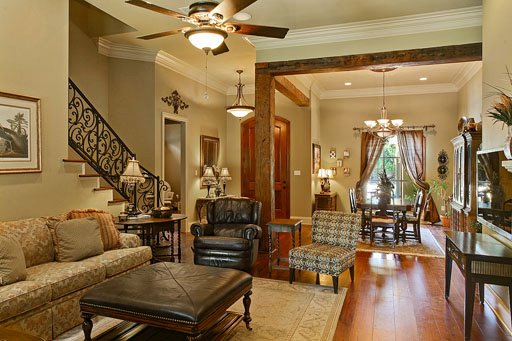
Convenient location, great family home! Located in the center of town, with a fantastic selection of shops as well as quick and easy access to the interstate. The bedrooms have carpet and the rest of the home has beautiful engineered wood floors. This is a great property for relaxation due to it's covered patio porch! There's also a spacious backyard and a fishpond. If you are looking for walk-in closets, an open floor plan, and a fabulous landscape this is the home for you! Call for a showing!
Showing posts with label baton rouge homes for sale. Show all posts
Monday, June 8, 2015
Friday, May 15, 2015
12510 W Lake Estates, Baton Rouge 225.234.0022
STUNNING custom built home located on a beautifully landscaped lot at the end of a quiet, dead end street. Inside the home you will find hardwood floors in the living areas, a formal dining room, separate laundry, wet bar with a wine cooler and wine cellar. The chef's kitchen is extremely spacious and features an island and a gas stove with a beautiful brick surround. The Subzero refrigerator and all other appliances will remain. The living room features a fireplace and windows that look out onto the beautifully landscaped flagstone patio which also includes a fountain. The master is off of the living area and is truly an oasis in which to relax and enjoy quiet time. There is a pine and cypress study with windows that look out onto the lake and the master bath features his and hers vanities and closets, a separate shower and jetted tub and tons of space. There is one other bedroom downstairs perfect for guests or a nursery. Upstairs you will find a HUGE bonus room and two more bedrooms. If outdoor living is what you are looking for this home may be the perfect fit, just beyond the finished patio and lush yard sits a dock above a 100 year old lake that can be sued for canoeing, fishing or just relaxing by the water. This home is truly a sanctuary that is hidden away right in the center of town. Don't wait, schedule your private showing today!
Tuesday, February 5, 2013
High-end home sales increasing in B.R.
Remember when it was a big deal if a Baton Rouge home was on the market for $1 million or more? Those days are long gone. Consider that so far in 2013, more than three-dozen homes are listed for $1 million or more. That's not including the 12 mansions and one luxury penthouse on the block with price tags of at least $2 million. Then there's Paula Pennington de la Bretonne's 29,500-square-foot estate, which sits on 12 acres at 11001 Highland Road. It has an eye-popping asking price of $18 million, which, at more than $608 per square foot, is a record for this market. But top-dollar agents caution against reading too much into the number of expensive homes on the market. Rather, they suggest that some sellers still have unrealistic expectations about what their homes will fetch. "A lot of people are not realistic about what their homes are worth," says Quita Cutrer of Burns & Co., who handled several of 2012's top transactions. "They're hanging on to what they think they should get for them." If 2012 was not a banner year for high-end home sales in Baton Rouge, it was the best local realtors have seen in a while. Take a look at the most expensive home sales of 2012 in Baton Rouge, as compiled by Business Report, here.
Read more from Business Report here: http://www.businessreport.com/real-estate-weekly/2052013/High-end_home_sales_increasing_in_Baton_Rouge#ixzz2K2ePM3Lu
Wednesday, October 31, 2012
SOLD, 36440 Reinninger Road, Denham Springs,225.234.0022
Only one owner of this beautiful 3 bedroom 2 bath house in Denham Springs. Huge lot with a fenced in yard perfect for entertaining. Wood floors throughout the living and carpet in bedrooms. Gas fireplace and vaulted ceilings in living area. Separate his and her vanities with separate tub and shower in master bath. Large washer and dryer area. Call Tim at 225-301-7467 or visi buyorsellbatonrougehomes.com for more information!
Friday, July 13, 2012
10 Summer Moving Tips
From REALTOR.com
How to prepare for a seamless transition
If you're moving this summer, the busiest season for moving, you know how daunting it can be. But if you create a blueprint for your move, the transition from house to house will go more smoothly.
Here are 10 things you can do to prepare for a seamless transition.
1. Full serve, partial serve or a do-it-yourself move. Can you do it alone or should you hire a licensed moving company for a full-service or partial-service move? This is one of the first and often most difficult questions soon-to-be moving households face. The answer depends on your lifestyle, household size, budget and amount of time you have to get everything accomplished. Get written quotes from at least three licensed moving companies so you know you’re getting the best deal based on your specific moving needs. Moving yourself or doing a partial-service move? Packing calculators can make it easier to estimate the amount of boxes and packing materials needed.
2. Plan to unpack BEFORE you pack. Take photos of each room in the new home before you arrive with furniture, plants, appliances and family in tow. Write down on a clip board where each item should go in your next home before packing, and carry it with you on moving day. List out the major items that need to be assembled first. As you place each item in its new room, cross it off the list and you will be one step closer to enjoying your new home.
3. Be strategic about packing. If you have more than a month to ‘pick up and move’, start early. Complete a free change of address and schedule utilities ahead of time at Moving.com. Start packing early. Whether it’s one room, one cabinet or a drawer at a time, weed through what may be years of accumulation. As you’re going through your belongings, divide everything into these helpful categories: donate to charity, give to a friend, recycle, trash, pack now, or keep handy until moving day. You’ll be surprised at how much you can donate, recycle or give to friends. And, you’ll not be overwhelmed with the task at hand three days before you move.
4. Moving is NOT child’s play. Plan ahead. Consider daycare on moving day, or get help from a friend or family member. Provide lunch or some other appropriate thank you gesture if you do call in a favor. If that’s not an option, prioritize setting up safe places for your children to play in the new home on moving day so they’re not underfoot. This will help everyone remain happy and calm on moving day.
5. Don’t fight with Fido. Sometimes we forget that all the packing and constant in-and-out of visitors is stressful for animals. Consider checking your pet into a daycare facility, or setting up a time for a friend to take them or check them into petday care. Don’t let your four-legged best friends get lost in the shuffle and remember to make day-of moving arrangements.
6. Keep track of small parts. Some items need to be broken down into pieces when moving, but do you know what to do with the small screws and washers that you end up with? Rather than tape them to the furniture, which can result in losing them, put everything in a baggie that is clearly marked and sealed. Keep all of the separate baggies together in one box on moving day and personally take it with you to your new home.
7. Take pictures of electronic hook-ups. Hooking up TVs, DVRs, home theater systems and computers can be challenging. Before unplugging any wires for the move, take a photo of the connections, print them out and label them in detail. This will create fewer headaches when setting up technology in the new home. Keep track of all loose wires using baggies or boxes that are clearly labeled, and personally carry these easy-to-lose items on moving day.
8. Packing cleaning products and toxins. Products such as detergents, pesticides and paint are heavy and unwieldy to pack. Dispose of as many as possible before the move in an eco-friendly way. Call your city’s waste disposal department for guidance on proper disposal. For items that must be transported, pack them in a small box within a larger box for protection against leaks. Don’t overstuff boxes with these items! Consider marking these boxes in a different color, and seal them extra tight. Keep them separate from the rest of the boxes, particularly if you have kids and pets.
9. Consider getting full value insurance protection. If using a professional mover, it may cost a few dollars extra, but it provides peace of mind and eliminates later annoyances. Investing in full value protection means any lost or damaged articles will be repaired or replaced, or a cash settlement will be made at current market value, regardless of age. It's important to note that the required minimum coverage of 60 cents per pound would not cover the replacement cost of more expensive items such as a flat screen TV if damaged in transit.
10. Know your rights. If using a professional mover, research your rights as a consumer with either the Federal Motor Carrier Safety Administration (FMCSA) for interstate moves or contact the state agency within the state in which you reside for moves within state. Also, enlist the help of the Better Business Bureau (BBB) or local law enforcement if the moving company fails to live up to its promises or threatens to hold your belongings hostage. FMCSA requires interstate movers to offer arbitration to help settle disputed claims.
Thursday, July 12, 2012
8718 Old Hammond Highway Home For Sale. 3583 sq ft - $489,900
This 4 bedroom 4.5 Bath home is simply a buyers dream. Open
floor plan with a beautiful spacious kitchen with stainless steel appliances,
brick floor pavers, tons of cabinet space, and a 47 ft granite counter top. The
spacious living room has a wall of windows which allows a lot of natural
lighting. Also has an office downtstairs. The master suite opens into a large
master bath with a garden tub, separate shower, separate vanities and large walk
in closets. Each additional bedroom is large with lots of closet space. There is
also a bonus room upstairs perfect for children to play. New Orleans style back
patio also makes this home great for entertaining. There is so much space and
luxury in this home you won't want to miss this opportunity. Call Tim at 225-301-7467 to schedule a private showing.
Wednesday, July 11, 2012
How to Determine How Much Home Can You Afford
From Fox Business:
Interest rates are low and home prices have plummeted from their 2008 highs, making it an ideal market for homebuyers. But before even starting the hunt, every buyer needs to determine exactly what they can afford and how much they will need for a down payment.
While a down payment is sure to be in the thousands, 90% of new mortgages are government-backed FHA loans, according to Bob Walters, chief economist at Quicken Loans, that only require 3.5%-9% upfront, compared to the standard 20%. Veteran Home loans or VA loans sometimes finance the entire home purchase and don’t require a down payment.
“Most clients that apply for an FHA loan put down the lowest available down payment of 3.5% to 5%. This is the major advantage of an FHA loan,” say Noah Brown, a mortgage loan originator at American Mortgage Group. Keep in mind that if you don’t put down 20%, you’ll likely have to pay for private mortgage insurance on top of your mortgage payment until you have enough equity in the home.
Calculating How Much Home You Can Afford
When you get pre-approved for a loan, the lender will tell you the maximum you can borrow based on your debt to income. Most banks set the debt to income ratio at 45% to 50%, which means you’re debt can’t exceed 50% of your income. Once your debt to income ratio is determined, the bank will tell you how much of a home you can afford.
Experts warn buyers that just because they are approved to borrow a certain amount, it could be more practical to borrow less to have more flexibility with other lifestyle spending. If you like to eat out every night, enjoy weekly shopping trips or have an expensive lifestyle buying the maximum house you can afford could leave you strapped for cash. “Some clients may not feel comfortable with a debt-to-income ratio of 50% and thus look for a lesser value home, with the knowledge of what they can afford / qualify for,” says Brown.
Once you know what you can afford, next you need to figure out the down payment amount and how to come up with it. According to Brown, you should never use the majority of your assets to for your down payment—putting 20% down instead of 25% will leave some emergency funds in the bank.
Collecting funds for the down payment also varies by financial situation. According to Walters of Quicken Loans, the majority of people use money from their savings account or from the sale of a previous home as the down payment.
If you don’t have adequate savings for the payment, you can tap your 401(k) or IRA, although experts warn you could be hit with significant penalties for withdrawing early. Most lenders allow a portion of the down payment to come from a gift as long as it’s a gift with no strings attached. “Lenders want to make sure it’s a gift and not a loan,” says Walters. “They don’t want an over leveraged client.”
You can not charge your down payment or otherwise borrow money through an unsecured loan because they will increase your debt-to-income ratio.
There are non-profit companies that offer eligible buyers assistance in buying a home. For instance AmeriDream, a non-profit focused on helping people find affordable housing, helps people with low and moderate incomes buy homes by offering down-payment assistance. Buyers who are approved for an FHA loan, but don't have the money for the down payment can apply for the AmeriDream down payment assistance.
The Nehemiah Program, which is a down payment assistance program that offers help to buyers who qualify for an FHA loan. With this program there are no limits on income or assets. For a list of down payment assistance programs click here
.
Read more: http://www.foxbusiness.com/personal-finance/2012/07/11/how-to-determine-how-much-home-can-afford/#ixzz20KO10ggQ
Interest rates are low and home prices have plummeted from their 2008 highs, making it an ideal market for homebuyers. But before even starting the hunt, every buyer needs to determine exactly what they can afford and how much they will need for a down payment.
While a down payment is sure to be in the thousands, 90% of new mortgages are government-backed FHA loans, according to Bob Walters, chief economist at Quicken Loans, that only require 3.5%-9% upfront, compared to the standard 20%. Veteran Home loans or VA loans sometimes finance the entire home purchase and don’t require a down payment.
“Most clients that apply for an FHA loan put down the lowest available down payment of 3.5% to 5%. This is the major advantage of an FHA loan,” say Noah Brown, a mortgage loan originator at American Mortgage Group. Keep in mind that if you don’t put down 20%, you’ll likely have to pay for private mortgage insurance on top of your mortgage payment until you have enough equity in the home.
Calculating How Much Home You Can Afford
When you get pre-approved for a loan, the lender will tell you the maximum you can borrow based on your debt to income. Most banks set the debt to income ratio at 45% to 50%, which means you’re debt can’t exceed 50% of your income. Once your debt to income ratio is determined, the bank will tell you how much of a home you can afford.
Experts warn buyers that just because they are approved to borrow a certain amount, it could be more practical to borrow less to have more flexibility with other lifestyle spending. If you like to eat out every night, enjoy weekly shopping trips or have an expensive lifestyle buying the maximum house you can afford could leave you strapped for cash. “Some clients may not feel comfortable with a debt-to-income ratio of 50% and thus look for a lesser value home, with the knowledge of what they can afford / qualify for,” says Brown.
Once you know what you can afford, next you need to figure out the down payment amount and how to come up with it. According to Brown, you should never use the majority of your assets to for your down payment—putting 20% down instead of 25% will leave some emergency funds in the bank.
Collecting funds for the down payment also varies by financial situation. According to Walters of Quicken Loans, the majority of people use money from their savings account or from the sale of a previous home as the down payment.
If you don’t have adequate savings for the payment, you can tap your 401(k) or IRA, although experts warn you could be hit with significant penalties for withdrawing early. Most lenders allow a portion of the down payment to come from a gift as long as it’s a gift with no strings attached. “Lenders want to make sure it’s a gift and not a loan,” says Walters. “They don’t want an over leveraged client.”
You can not charge your down payment or otherwise borrow money through an unsecured loan because they will increase your debt-to-income ratio.
There are non-profit companies that offer eligible buyers assistance in buying a home. For instance AmeriDream, a non-profit focused on helping people find affordable housing, helps people with low and moderate incomes buy homes by offering down-payment assistance. Buyers who are approved for an FHA loan, but don't have the money for the down payment can apply for the AmeriDream down payment assistance.
The Nehemiah Program, which is a down payment assistance program that offers help to buyers who qualify for an FHA loan. With this program there are no limits on income or assets. For a list of down payment assistance programs click here
Read more: http://www.foxbusiness.com/personal-finance/2012/07/11/how-to-determine-how-much-home-can-afford/#ixzz20KO10ggQ
Friday, June 1, 2012
Money-Saving Tips for Your First Home
From Fox Business:
You've just closed on your first house? Congratulations! During this process, some of your older friends and relatives may have mentioned how expensive home ownership can be.
You may not want to hear it, but they're right. The National Association of Realtors reports that median existing home prices in early 2012 are hovering around $163,000 -- a serious investment for most. But beyond this, owning a house can start a landslide of expenses, planned and unplanned, that can savage your budget.
But smart choices made during your move-in period can not only save you cash at the outset, but also set you up to save for years to come. Here are a few tips to help you manage your expenses wisely:
Go cheap on appliances
Chances are, your house is missing something critical. A refrigerator, perhaps? Washer and dryer? The weeks between closing and move-in are a great time to hunt for appliances with a level head and a tight wallet. Research lower-cost models on neutral review sites such as Consumer Reports, and look for discounted refurbished items or floor models. Many stores sell these items with guarantees similar to new items. And pass on any additional warranties -- self-insuring with savings is a better option if you can manage it.
Form a posse ... of handymen
You may have a home-warranty policy, paid by the seller, that lasts through the first year of ownership. With these services, you call one number to arrange repairs or replacement of broken items that came with the house. Here's the big "but": Your previously-owned items (that 10-year-old washer that worked great in your apartment but just flooded your new laundry room, for example) aren't covered. Neither is damage you cause yourself.
Also, a year goes by quickly. You should do your best to prevent costly home repairs, but begin building a list of trustworthy service people -- plumbers, handymen, electricians -- as troubles occur. Then, when your outdoor faucet explodes during a particularly bad winter, you don't have to call the first (and probably priciest) company you find.
Save on starter items
Yes, you're going to need to buy stuff for your new place. Whether you need more lamps, extra chairs or serving platters for that awesome housewarming party, these expenses can add up quickly.
Before heading to Target or a department store, try your local thrift stores. There you can add to your house inexpensively, and later buy your dream decor when the pressure is off. If you prioritize tucking your money into a savings account with a high interest rate, you may be able to afford those perfect items sooner than you think!
Meet your neighbors
Who knows? You might end up in one of those neighborhoods where muffin baskets show up on your doorstep. If they don't, make an effort to introduce yourself to the neighbors anyway -- and get to know them. In a pinch -- when you need someone to watch your cats or want to cut costs by carpooling -- you may find helping hands. Will you like all of them? Probably not. But having a few good friends on the block can save money and headaches.
Your older friends and relations are right: Home ownership is expensive. However, making a few smart decisions after your purchase can turn your first house into your dream home -- and not a money pit.
The original article can be found at SavingsAccounts.com:
Money-saving tips for your first home
Read more: http://www.foxbusiness.com/personal-finance/2012/05/31/money-saving-tips-for-your-first-home/#ixzz1wYRY4hcJ
You've just closed on your first house? Congratulations! During this process, some of your older friends and relatives may have mentioned how expensive home ownership can be.
You may not want to hear it, but they're right. The National Association of Realtors reports that median existing home prices in early 2012 are hovering around $163,000 -- a serious investment for most. But beyond this, owning a house can start a landslide of expenses, planned and unplanned, that can savage your budget.
But smart choices made during your move-in period can not only save you cash at the outset, but also set you up to save for years to come. Here are a few tips to help you manage your expenses wisely:
Go cheap on appliances
Chances are, your house is missing something critical. A refrigerator, perhaps? Washer and dryer? The weeks between closing and move-in are a great time to hunt for appliances with a level head and a tight wallet. Research lower-cost models on neutral review sites such as Consumer Reports, and look for discounted refurbished items or floor models. Many stores sell these items with guarantees similar to new items. And pass on any additional warranties -- self-insuring with savings is a better option if you can manage it.
Form a posse ... of handymen
You may have a home-warranty policy, paid by the seller, that lasts through the first year of ownership. With these services, you call one number to arrange repairs or replacement of broken items that came with the house. Here's the big "but": Your previously-owned items (that 10-year-old washer that worked great in your apartment but just flooded your new laundry room, for example) aren't covered. Neither is damage you cause yourself.
Also, a year goes by quickly. You should do your best to prevent costly home repairs, but begin building a list of trustworthy service people -- plumbers, handymen, electricians -- as troubles occur. Then, when your outdoor faucet explodes during a particularly bad winter, you don't have to call the first (and probably priciest) company you find.
Save on starter items
Yes, you're going to need to buy stuff for your new place. Whether you need more lamps, extra chairs or serving platters for that awesome housewarming party, these expenses can add up quickly.
Before heading to Target or a department store, try your local thrift stores. There you can add to your house inexpensively, and later buy your dream decor when the pressure is off. If you prioritize tucking your money into a savings account with a high interest rate, you may be able to afford those perfect items sooner than you think!
Meet your neighbors
Who knows? You might end up in one of those neighborhoods where muffin baskets show up on your doorstep. If they don't, make an effort to introduce yourself to the neighbors anyway -- and get to know them. In a pinch -- when you need someone to watch your cats or want to cut costs by carpooling -- you may find helping hands. Will you like all of them? Probably not. But having a few good friends on the block can save money and headaches.
Your older friends and relations are right: Home ownership is expensive. However, making a few smart decisions after your purchase can turn your first house into your dream home -- and not a money pit.
The original article can be found at SavingsAccounts.com:
Money-saving tips for your first home
Read more: http://www.foxbusiness.com/personal-finance/2012/05/31/money-saving-tips-for-your-first-home/#ixzz1wYRY4hcJ
Subscribe to:
Posts (Atom)